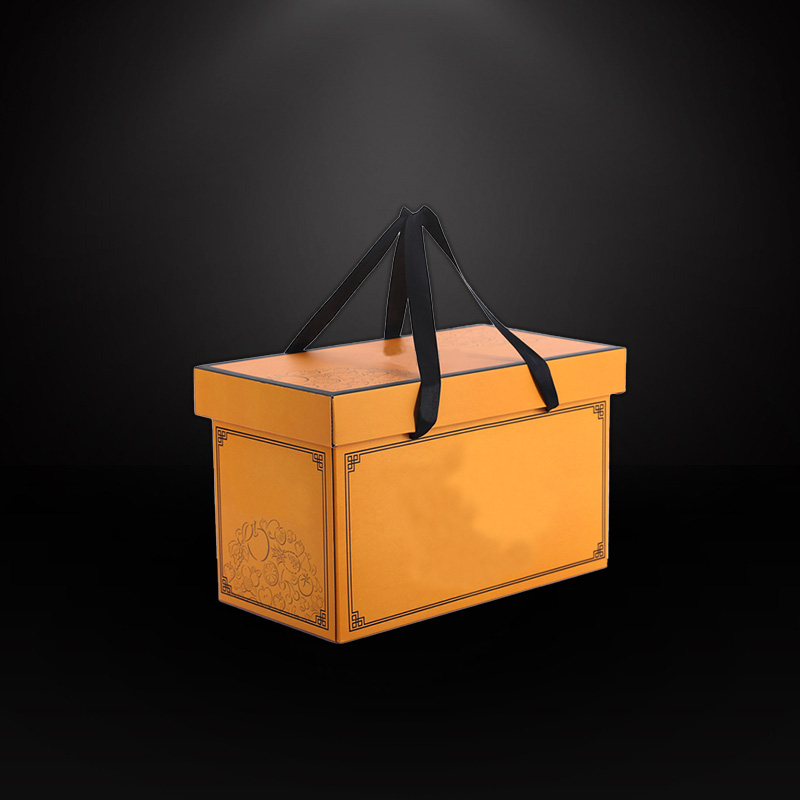
Not every corrugated box is built the same. Two boxes with identical weight can have vastly different stacking strength. The Edge Crush Test (ECT) measures how much force a corrugated box can withstand on its edges before collapsing. Choosing the wrong ECT rating leads to crushed products or wasted money. This guide helps you match ECT ratings to real-world stacking demands for cardboard boxes of all types.
What is ECT and why does it matter?
ECT measures the compression strength of a corrugated box in pounds per linear inch. A rating of ECT 32 means one inch of the box edge holds 32 pounds of pressure. Unlike the older Mullen Burst Test (which measures puncture resistance), ECT specifically predicts stacking performance. For corrugated shipping boxes stacked on pallets, ECT is the most reliable predictor. Low ECT cardboard boxes crush under weight. High ECT carton boxes cost more than necessary.
Calculate your actual stacking load
Before choosing any corrugated box, calculate the total weight your bottom box must support. Multiply the weight of one filled corrugated box by the number of boxes in a vertical stack. Add a safety factor of 3 to 5 times for warehouse vibrations and humidity. For example: 10 boxes × 10 kg each = 100 kg bottom load × safety factor 4 = 400 kg required ECT strength. Convert to pounds (400 kg × 2.2 = 880 lbs). A corrugated box with ECT 32 handles roughly 500 lbs. You need ECT 51 or higher for this corrugated shipping boxes application.
Match ECT to box construction and flute type
ECT rating depends heavily on flute size and wall layers. A single-wall corrugated box with B-flute typically offers ECT 26 to 32 — suitable for lightweight cardboard shipping boxes. A single-wall C-flute corrugated box reaches ECT 32 to 44. Double-wall corrugated boxes (BC or EB flute combinations) achieve ECT 48 to 90. For heavy industrial carton boxes, triple-wall construction exceeds ECT 100. Never assume a thicker corrugated box has higher ECT — always check the certified rating on the box certificate stamp.
Consider your shipping environment
ECT ratings drop significantly under real-world conditions. A corrugated box rated ECT 44 in dry laboratory conditions may perform at ECT 28 after rain exposure. High humidity weakens any corrugated box by up to 40%. For cold chain or produce shipping, choose cardboard boxes with ECT ratings 15–20 points higher than your dry calculation. For corrugated shipping boxes traveling across multiple climate zones, specify moisture-resistant board combined with elevated ECT. Your carton boxes will survive the journey.
Read the box certificate stamp
Every certified corrugated box displays a box certificate stamp — usually on the bottom flap. This stamp lists either ECT or Mullen rating, never both interchangeably. Look for "ECT-32" or "ECT-44" clearly printed. Avoid cardboard boxes without visible certification. Reputable corrugated shipping boxes from certified suppliers always display current stamps (valid for 12 months from the box manufacturer). If a corrugated box has an expired or missing stamp, reject it. Your carton boxes need verifiable ratings.
Common ECT ratings and their applications
ECT 26 to 28: Light corrugated box for 5–15 lbs total stack. Use for e-commerce envelopes or thin cardboard boxes.
ECT 32: Standard corrugated box for 20–40 lbs stacks. Ideal for most cardboard shipping boxes in retail.
ECT 44: Heavy-duty corrugated shipping boxes for 60–80 lbs stacks. Common in industrial and wholesale.
ECT 51 to 90: High-strength corrugated box for 100+ lbs stacks. Used for automotive, machinery, and bulk carton boxes.
ECT 90+: Double or triple-wall corrugated box for extreme loads. Rare but essential for dense products.
Avoid over-engineering your corrugated shipping boxes
Higher ECT costs more. A corrugated box with ECT 51 costs roughly 30% more than ECT 32. Many buyers overspecify cardboard boxes, wasting money on unnecessary strength. Test your stack with actual corrugated shipping boxes under warehouse conditions. Run a 30-day compression test with your filled carton boxes. If bottom boxes show no crushing, reduce ECT by one grade. The perfect corrugated box has exactly enough strength — not more, not less.
Test before full production
Choose three potential ECT ratings — one below your calculation, one matching, and one above. Order 50 corrugated boxes of each rating. Stack them for 48 hours under expected humidity. Measure box bulge and compression daily. Select the lowest ECT corrugated box that passes without visible deformation. This empirical method delivers the most cost-effective corrugated shipping boxes for your specific supply chain.
ECT drives stacking success
Choosing the right corrugated box ECT rating requires calculating actual stack load, adding safety factors, and testing real conditions. Match ECT to flute type, environment, and certified stamps. Start with your calculation, then validate with physical tests. Your cardboard boxes, corrugated shipping boxes, and carton boxes will arrive intact — and you will not pay for unnecessary strength. A properly rated corrugated box is an investment in product safety.
XiaMen TongChangshun printing and packaging Co., Ltd, which was established in December 1997, mainly engaged in corrugated box, gift box,PDQ, instruction manual and other paper packaging. TongChangshun has strong technical force and creative and innovative ability, advanced production equipment, mature production technology and increasingly perfect quality assurance system (since 2004, we had passed the ISO9000 quality management system certification, ISO14001 environmental management system certification, OHSAS18001 occupational health and safety management system certification), and passed safety production standardization certification, two integration management system certification, and commodity bar code printing qualification certification, We have passed Wal-Mart certification, Disney certification, BSCI certification, FSC certification, UL certification, G7 certification, and has become the designated printing and packaging enterprise of some international brands and companies.